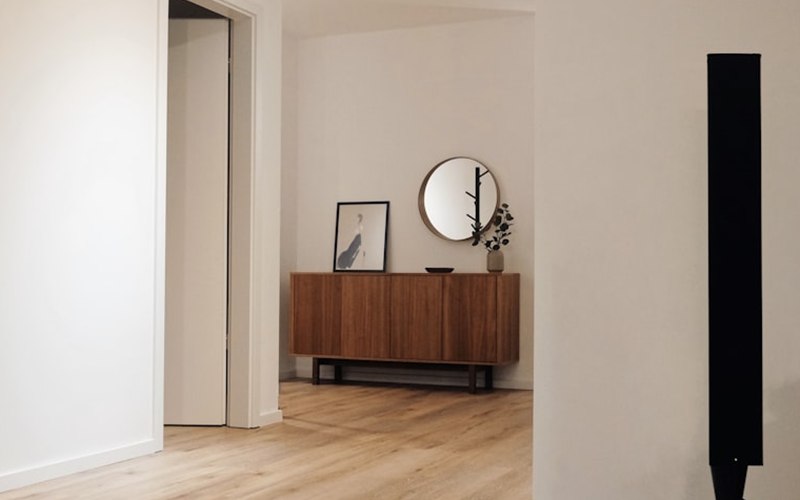
Few features of a home are as noticeable or as influential as the flooring underfoot. It shapes how each room looks, feels, and works day to day. It's also a sizable outlay, with whole-house flooring jobs landing anywhere from $3,000 to $30,000 or more depending on the material and the square footage involved. Picking well means weighing looks, toughness, upkeep, comfort, and cost room by room. This guide lays out every major option so your decisions are well informed.
The Materials, Side by Side
Solid Hardwood
Solid hardwood is still the benchmark everything else is measured against. Oak, maple, hickory, and walnut top the list of species, each with its own grain and tone. Because it can be sanded and refinished several times across a 50- to 100-year life, it's a genuine long-haul investment. The trade-off is its dislike of moisture and temperature swings, which rules it out for basements, bathrooms, and any spot likely to get wet. Figure $6 to $15 per square foot for the wood, plus $3 to $8 per square foot to have it installed.
Engineered Hardwood
Engineered hardwood pairs a true wood veneer with a plywood or HDF core beneath. That layered build keeps it more stable than solid wood, so it copes better with shifting humidity. It can go down over concrete slabs and in basements where solid hardwood simply can't. Depending on how thick the top layer is, you can usually refinish it one to three times. Pricing mirrors solid wood at $5 to $14 per square foot for materials, with somewhat cheaper installation thanks to the click-lock systems many products use.
Luxury Vinyl Plank (LVP)
There's a reason LVP is the fastest-growing category out there. It's completely waterproof, exceptionally durable, easy on the feet, and offered in strikingly lifelike wood and stone designs. Today's LVP built around a rigid SPC (stone polymer composite) core fends off dents, scratches, and temperature shifts. It suits every room, basements, kitchens, and baths included. Most of it floats over the subfloor with click-lock planks, which puts it among the friendliest choices for DIYers. Materials run $3 to $8 per square foot.
Laminate
Laminate stacks a printed image layer on an HDF core and seals it under a clear wear coat. It imitates wood or stone for less than either hardwood or LVP. Modern laminate resists scratches better than a lot of its rivals, which makes it a fine match for households with pets. The catch is that classic laminate isn't waterproof. Water-resistant versions are on the market now, but they still fall short of LVP's full waterproofing. Materials cost $1.50 to $5 per square foot.
Tile (Ceramic and Porcelain)
For wet spaces, nothing beats tile. Porcelain is denser and more water-resistant than ceramic, which even makes it viable outdoors. Tile arrives in a near-limitless range of colors, patterns, and sizes, including wood-look planks that deliver a hardwood appearance with tile's waterproof toughness. The downsides are that it's hard and cold underfoot without radiant heat below, and it really needs a pro for the best outcome. Materials run $2 to $15 per square foot, with installation adding another $5 to $12.
Carpet
Carpet brings warmth, sound dampening, and softness that no hard surface can rival. It's the favorite for bedrooms and bonus rooms where bare feet land. Stain-resistant carpets have come a long way, yet carpet still holds onto allergens and is tougher to keep clean than hard flooring. Skip it in kitchens, baths, and basements. Materials and padding run $2 to $8 per square foot, with $1 to $3 more for installation.
Price Per Square Foot (Materials Only)
- Laminate: $1.50-$5.00
- Carpet: $2.00-$8.00
- Ceramic Tile: $2.00-$10.00
- LVP: $3.00-$8.00
- Engineered Hardwood: $5.00-$14.00
- Solid Hardwood: $6.00-$15.00
- Porcelain Tile: $3.00-$15.00
Hiring a pro usually tacks on $2 to $10 per square foot, depending on the material and the shape of the subfloor. Across a 1,500 sq ft home, total costs span from about $5,000 (laminate) to $35,000 or more (solid hardwood everywhere).
The Right Floor for Each Room
No one material wins in every room. Here's how the choices shake out based on what each space throws at the floor:
- Kitchen: LVP, porcelain tile, or engineered hardwood. With spills and splashes a given, waterproof or water-resistant is a must.
- Bathroom: Porcelain tile or LVP, both of which shrug off standing water. Steer clear of hardwood and laminate.
- Living Room: Hardwood, engineered hardwood, or LVP. As the room on display, this is where looks count for the most.
- Bedrooms: Carpet for softness, or hardwood and LVP dressed up with area rugs. It comes down to personal taste.
- Basement: LVP or engineered hardwood installed as a floating floor, since both tolerate the moisture and temperature swings of below-grade rooms.
- Entryway/Mudroom: Porcelain tile or LVP. These busy, damp-prone areas demand tough, waterproof materials.
Doing It Yourself vs. Hiring Out
Some floors lend themselves to a weekend install, while others really call for a pro to come out right.
Reasonable DIY Projects
- LVP (click-lock): The simplest floor to lay on your own, with no glue and no nails. The floating planks snap together over most existing subfloors, and many homeowners knock out a room in a single day.
- Laminate: Click-lock installation much like LVP. Doable for anyone at ease with simple measuring and a saw.
- Engineered hardwood (floating): Click-lock engineered boards go down a lot like LVP, though the material is less forgiving when the subfloor isn't flat.
Jobs for the Pros
- Tile: It demands mortar, grout, exact cuts, and a dead-level subfloor. Sloppy tile work leads to cracks, lippage, and water getting through.
- Solid hardwood (nail-down): It calls for specialized tools, know-how around acclimation, and skill at transitions and odd-shaped rooms.
- Carpet: Stretching it correctly needs a power stretcher and seaming iron that most homeowners neither own nor know how to run.
Upkeep and Longevity
How happy you stay with a floor over the years hinges on matching the material to how your household lives and how much maintenance you'll actually do:
- Hardwood: Sweep often, damp-mop now and then, and refinish every 7 to 10 years. Keep water to a minimum. Scratches from pets and furniture are the main worry.
- LVP: Sweep and mop with abandon. Practically bulletproof under normal home use. You can't refinish it, but you can replace single planks.
- Tile: An almost indestructible surface. The grout lines need occasional sealing and can stain if ignored, and cracked tiles can be swapped one at a time.
- Laminate: A breeze to sweep and clean, just keep standing water away. It can't be refinished, and replacing a damaged plank in the middle of a floor can be tricky.
- Carpet: Vacuum a couple of times a week and bring in a deep cleaning once a year. Expect 8 to 15 years depending on quality and foot traffic.
The smartest flooring isn't the priciest or the most fashionable. It's the one that genuinely fits how your household lives, how much upkeep you'll commit to, and what your budget can handle.
Trends and Resale Value
Right now the market leans toward wide planks, light-to-medium wood tones, and matte finishes across the hard-surface categories. The gray floors that ruled the 2010s are fading, giving way to warm naturals and white oaks. Herringbone and chevron layouts are catching on in both hardwood and LVP.
On the investment side, hardwood reliably tops the charts for resale, returning 70 to 80 percent of its cost. Buyers are warming to LVP too, especially in mid-priced homes. Carpet in the main living areas can actually drag down value, since most buyers intend to rip it out. For the strongest return, put hardwood or LVP in the main living spaces and save carpet for the bedrooms.