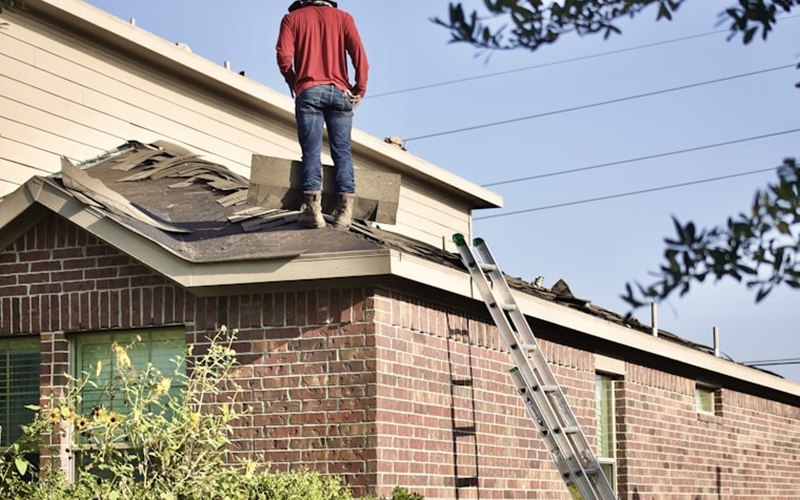
Hardly any part of a house puts in more work than the roof, and hardly any part is as easy to forget about until trouble shows up. It is, after all, the barrier standing between your household and whatever the weather throws at it. The trouble is that most owners only look up when there's already a problem, and by that point a minor patch job has frequently grown into a full tear-off. Getting a handle on your roof's current state, recognizing the line between fixing and replacing, and picking solid materials and a trustworthy crew can spare you thousands in expenses and plenty of frustration.
Red Flags That Your Roof Needs a Look
Checking your roof on a routine basis, at minimum twice annually and right after any serious storm, lets you spot trouble before it spreads:
- Shingles that are gone, split, or curling at the edges point to age and storm wear
- Shingle granules collecting in your gutters show the protective surface is wearing away
- Dips or sagging sections hint at structural trouble that a pro should assess right away
- Brown stains spreading across ceilings or walls are a sign of leaks in progress
- Light coming through in the attic reveals openings in the roof deck
- Patches of moss or algae hold moisture against the surface and speed up decay
- Age: Most asphalt shingle roofs hold up for 20 to 25 years. Once yours nears that mark, it's time to start budgeting.
Fix It or Replace It: Where the Line Falls
When a Repair Is the Better Move
Repairing makes sense when the damage stays in one area and the rest of the roof is still sound. You're usually looking at a repair situation when:
- Only a handful of shingles are missing or damaged (under 30% of the surface)
- There are small flashing problems near vents or the chimney
- A lone leak can be pinned to one exact spot
- The roof is under 15 years old and shows no broad signs of wear
Expect repairs to run somewhere between $300 and $1,500, shifting with how big and how reachable the job is.
When Replacing Is the Only Sensible Option
Once patching stops paying off, a complete replacement is the smarter spend:
- More than 30% of the roof surface is compromised
- Several leaks are active across different sections
- The roof has passed the 20-year mark and shows wear all over
- Your repair bills keep climbing year after year
- You expect to put the house on the market soon (a fresh roof reassures buyers in a big way)
Schedule a Free Roof Check and Quote
Get matched with licensed roofers near you and receive no-strings estimates inside of 48 hours.
Find Roofers Near YouA Look at Your Roofing Material Options
Asphalt Shingles
This is the go-to roofing choice across America, sitting atop roughly 80% of houses. It's easy on the wallet, comes in a broad palette of colors and looks, and goes up without much fuss. Basic three-tab shingles are the economical pick at $150 to $200 per square, while architectural shingles bring more visual depth and stronger durability for $200 to $400 per square. Keep in mind a "square" equals 100 square feet of coverage.
Metal Roofing
Metal is climbing fast in popularity thanks to how long it lasts and how well it saves energy. A standing seam metal roof can serve for 40 to 70 years, bounces back solar heat to trim cooling bills by 20 to 25%, and shrugs off strong winds. Pricing lands at $400 to $800 per square. That steeper starting price gets balanced out by the long service life and light upkeep.
Tile (Clay or Concrete)
You'll see tile most often on Mediterranean and Southwestern homes. It's tremendously long-lasting, holding up 50 to 100-plus years, though its weight can mean adding structural support. Pricing falls between $600 and $1,200 per square.
Slate
Slate sits at the top of the range, with a working life of 75 to 150 years. Genuine slate looks magnificent and is nearly impossible to wear out, but it carries a steep price and calls for installers who specialize in it. Pricing runs $800 to $1,500 per square.
Typical Full Replacement Pricing (2,000 sq ft roof)
- Asphalt (3-tab): $5,000-$8,000
- Asphalt (architectural): $7,500-$14,000
- Metal (standing seam): $12,000-$22,000
- Tile: $15,000-$30,000
- Slate: $20,000-$40,000
These figures cover labor, materials, and stripping off the old roof. Expect notable swings from one region to another.
Picking the Right Roofing Contractor
Who installs your roof counts every bit as much as what it's made of. A botched installation can slash a roof's working life in half. Use these steps to screen your candidates:
- Confirm licensing and coverage. Any roofer you hire should hold general liability and workers' compensation. Request the certificates.
- Look for manufacturer credentials. Crews certified through GAF, Owens Corning, or CertainTeed frequently come with longer warranties.
- Collect three written bids at a minimum. Each one should spell out materials, labor, schedule, and warranty coverage.
- Find out who does the work. Are they sending their own employees or subcontractors? How big is the crew, and how many days will it take?
- Go over the contract closely. It ought to lay out the payment plan, start and finish dates, who handles cleanup, and warranty specifics.
- Don't put down more than 30% in advance. A trustworthy roofer won't demand the full amount before the work starts.
How Insurance Factors In
Your homeowners policy might pay for roof damage from sudden incidents such as storms, hail, or a fallen tree. It won't, though, cover deterioration from age, ordinary wear, or skipped maintenance. Before you submit a claim, line up an independent estimate to weigh against what the insurance adjuster concludes. A brand-new roof can also bring down your premiums, so check with your insurer about possible savings once the job is done.
Everything you treasure inside the house sits beneath your roof. Spending on dependable materials and a reputable installer isn't simply upkeep, it's a way of safeguarding your finances.
Time for a New Roof? Begin Right Here.
Stack up quotes from screened local roofers. Estimates are free, and there's no commitment to move forward.
Compare Roofing Quotes